

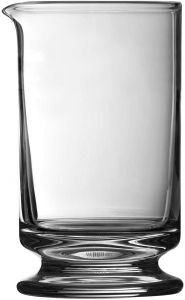
A mixing glass with a foot, delicately held at the base; a cobbler shaker, rhythmically swayed back and forth; a tightly coiled mixing spoon, silently stirring a drink. The tools we associate with the Japanese bartender have come to symbolize the dedication of the style to precision and quality. But, with the exception of the enigmatic trident bar spoon, the design of Japanese-style bar tools is, in general, of Western origin.
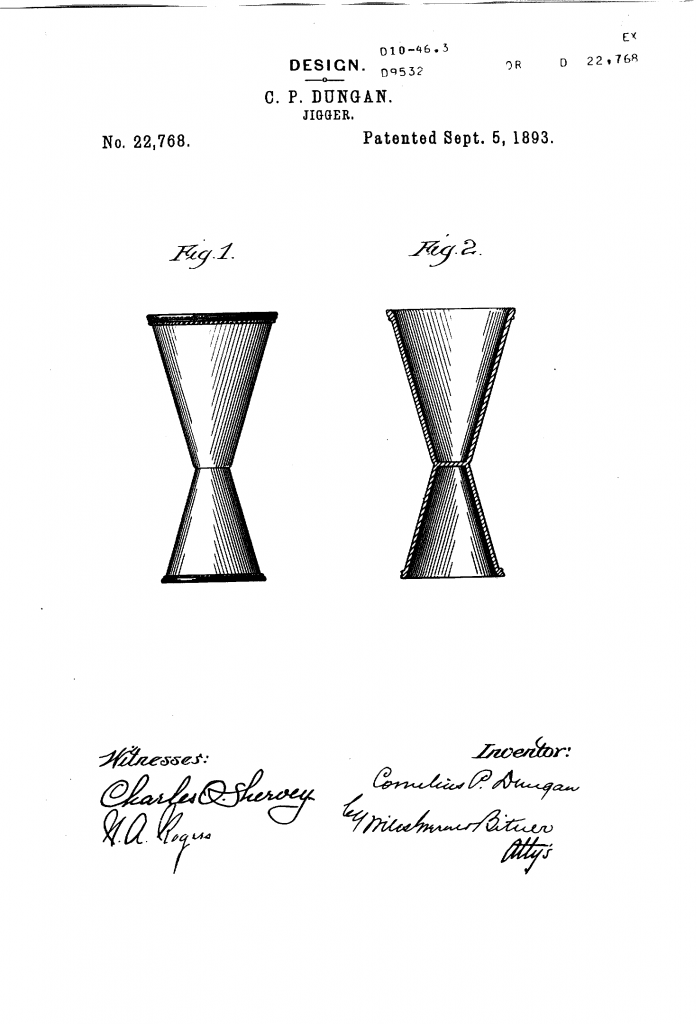
In fact, the spiral bar spoon eliminated the toddy stick after the commercialization of ice in the U.S. in the 1830s, almost at the same time that ice picks of various shapes and sizes became ubiquitous staples across the country. In 1884, Edward Huack of Brooklyn patented the three-piece cobbler shaker; half a decade later, Cornelius Dungan of Chicago filed a patent for a double cone jigger, a design that is often referred to today as "Japanese style".
American cocktails and bar tools arrived in Japan in the late 19th century, having emigrated to the island as part of the bounty brought by the ambassadors of Emperor Meiji, who were sent to acquire the best of Western culture. From that moment on, Japanese bartenders acted as custodians of cocktail culture, involuntarily tasked with keeping the torch alive during the dark period of Prohibition.
But they did more than just preserve. While the tools changed very little, with the exception of the mixing glass, which, having never developed a singular style in the U.S., acquired an ergonomic shape equipped with a spout for easy pouring. Seeded in Japanese soil, American bar items were imbued with the principles of a decidedly Japanese approach to cocktails.
"The Japanese bartender is very much of Japanese culture," explains Gen Yamamoto, owner of his namesake bar in Tokyo. "It's like the tea ceremony." A process focused on perfecting seemingly mundane tasks, mastering the tea ceremony requires great precision, exemplifying the pursuit of perfection that underlies much of Japanese culture. The tools, for their part, acquired a meaning that went beyond mere utilitarian function.
“Individual techniques and respect for the tools are paramount,” explains Kayoko Akabori, co-founder of Umami Mart, importer of Japanese bar items.
When these tools returned to the U.S. in the early 2000s, primarily in the suitcases of Greg Boehm, co-founder of Cocktail Kingdom, and other like-minded cocktail enthusiasts, they offered a lens through which to reclaim a lost American profession. Bartending in the states had deteriorated into an illegal occupation in the 1920s, elevated only slightly in the following decades to “something you did just to help pay your bills,” Boehm explains. Meanwhile, it remained a serious profession in Japan, which, he adds, "was a very enviable position for American bartenders."
Although it is a slightly inappropriate name, Boehm argues that the label "Japanese style," of which he is partly responsible, is not entirely inaccurate. "Yes, it started here," he explains, "but it has been used in Japan for more years." Initially, it was a description used to differentiate the elongated jigger from the invasive version (which was a "bastardization" of the 1950s, according to Boehm), the label simply stuck. And, for American bartenders, it represented the qualities long forgotten in American bartending: quality, precision, and professionalism.
But while many American bars have adopted Japanese-style bar items for these reasons (elongated jiggers, for example, offer greater precision and consistency), there are elements of the Japanese bartender that cannot be translated with the simple use of the tools.
"In a Japanese bar ... the idea is to put all your focus on making the best drink possible," says Ben Rojo of Angel's Share. The notion of stirring more than one drink at a time, something common in American bars, is anathema to this approach. "If you're splitting your attention between four mixing glasses ... it's something contrary to the aesthetic."
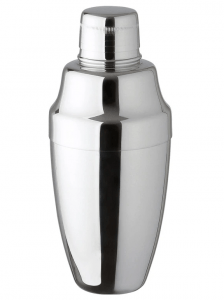
It is perhaps the ubiquity of the three-piece shaker (cobbler shaker) in Japanese bars that best illustrates this dedication to technique over efficiency. “Its disadvantages are numerous and largely come at the expense of speed,” Rojo explains of the cobbler shaker. "They require the attention of both hands, are more difficult to clean, pour more slowly, and their molded closure serves poorly for shaking dry at room temperature."
 In contrast, two-piece shakers, the standard in many American bars, offer the ease of shaking with one hand (allowing for shaking a drink in each hand simultaneously), easy stacking, cleaning, and, according to Rojo, “their generous volume with flat, heavy ends allows for easily breaking ice,” which translates to quick chilling and dilution of drinks, all priorities in high-volume bars.
But it is this breaking, he explains, that the cobbler deliberately avoids: “The absence of sharp angled edges ... allows the ice in a cobbler to be manipulated more skillfully, shaken more vigorously and for a longer period of time while controlling the breaking and thus managing dilution." In other words, he says, "Japanese-style bartenders sacrifice time and convenience with this choice of equipment in favor of presenting a drink, prepared with the shake method, better mixed and chilled.”
While there are untranslatable elements of Japanese-style bartending, the availability of the tools themselves has fostered a transnational dialogue between the two bastions of cocktail culture. While Cocktail Kingdom led the charge to make Japanese-style bar tools available in the U.S., Umami Mart has partnered with the Japanese manufacturer Yukiwa to bring items to Japan that never existed there before, such as julep strainers and jiggers with interior lines. It is an exchange that elevates cocktail service in both nations while keeping the bottom line for bar items, which is, in the words of Gen Yamamoto, "not design from design" but rather "design from use".
Towards the original articleTranslated and edited by Bar Stations


